
Gluten free · High protein · Make-ahead friendly · No added salt
Jump to RecipeI used to hate meatloaf.
Growing up, my mom’s version was basically a brick: dry, bland, the kind of dinner you choke down because you had to eat dinner to get dessert. When I moved in with my grandma in my early 20s and she said, “Meatloaf tonight,” I remember thinking, “Ugh, here we go.” I sat down ready to just power through it out of respect. Then I took a bite, and what? This was meatloaf?
Turns out, my mom just never figured it out. Grandma had it down. I basically stole her recipe as my starting point and have been messing around with it ever since, mostly because I had to. I’m gluten free, so regular breadcrumbs were a no-go, and quinoa ended up being the perfect stand-in. My husband refuses to touch ketchup, so barbecue sauce stepped in instead. It honestly makes the whole thing better: smokier, a little sweet, way more interesting.
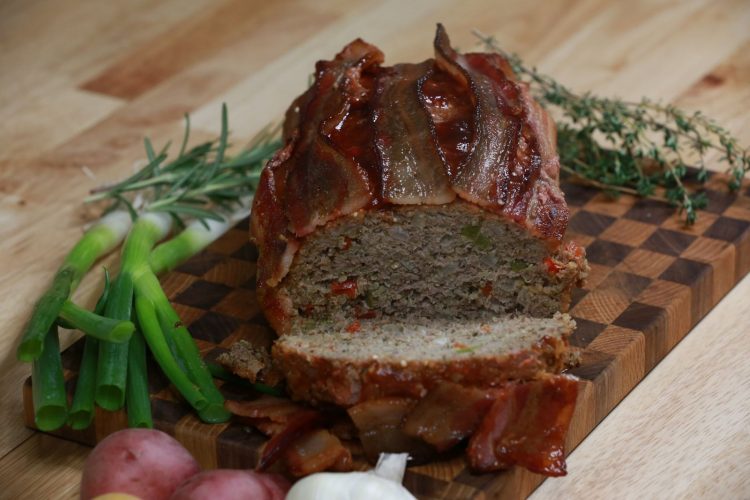
And then there’s the meat lineup: beef, turkey, Italian sausage, and bacon, all working together. Each one’s doing a job. Sausage brings the spice, bacon brings the fat and flavor, and turkey keeps it from being too heavy and greasy. This isn’t my mom’s meatloaf. It’s not even really my grandma’s anymore. Honestly, it’s mine, and it’s the one recipe on here that is 100% me.
A few things to know before you start
- The quinoa goes in dry. No pre-cooking. It soaks up the juices from the meat and veggies as the meatloaf bakes, which is exactly what breadcrumbs do in a traditional meatloaf.
- There’s no added salt. The sausage, bacon and barbecue sauce bring plenty.
- Lean meat works here. I use 90/10 or 93/7 beef and lean ground turkey. Most of our beef comes from a cow we buy each year to fill the freezer; when I run out, Brown Pearcy is one of my go-tos.
- You choose the heat. My family likes spicy, so I use hot Italian sausage. For anyone who doesn’t love heat, I use sweet Italian.
- Your pan will be full. This recipe fills a 9×5-inch loaf pan, so set it on a foil-lined sheet pan to catch drips.
Gluten-free label check
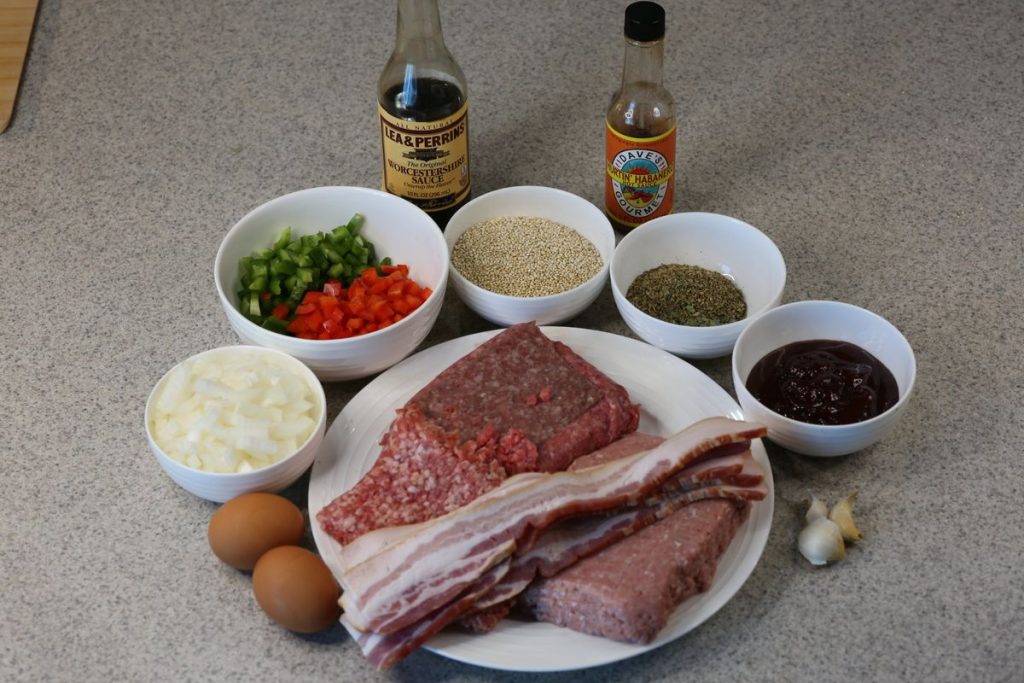
Meat, vegetables, eggs and quinoa are naturally gluten free. In this recipe, gluten can hide in the packaged ingredients, so check these labels:
- Italian sausage: some sausages use fillers or breadcrumbs. Look for “gluten free” on the package. I use Johnsonville, whose Italian sausage is labeled gluten free.
- Barbecue sauce: Sweet Baby Ray’s and Kinder’s both carry a gluten-free claim on the label. Plenty of others do too, but not all of them.
- Worcestershire sauce: Lea & Perrins sold in the US is made with distilled white vinegar and is labeled gluten free. The Canadian and European versions use malt vinegar, which contains gluten. Heads-up: it also contains anchovies, so leave it out if you’re cooking for someone with a fish allergy.
- Quinoa: naturally gluten free, but it can pick up wheat during growing and processing. I use Bob’s Red Mill Organic Quinoa, which the company tests and labels gluten free. If you’re cooking for someone with celiac disease, look for quinoa that is tested or certified gluten free.
- Seasoning and hot sauce: single herbs and spices, like dried basil and black pepper, are fine, but some blends include fillers. Spice Islands Organic Italian Seasoning is just herbs (salt free and labeled gluten free), and Dave’s Gourmet Hurtin’ Habanero is labeled gluten free.
- Bacon and ground turkey: plain bacon and plain ground turkey are usually gluten free. I use Kirkland Signature thick-sliced bacon and Jennie-O lean ground turkey, and both are labeled gluten free. Check the label on flavored or specialty varieties.
One habit worth building: read the label every time you buy a new package or bottle. Companies tweak their recipes, and the version you trusted last year may not be the one on the shelf today.
Tips for the best meatloaf
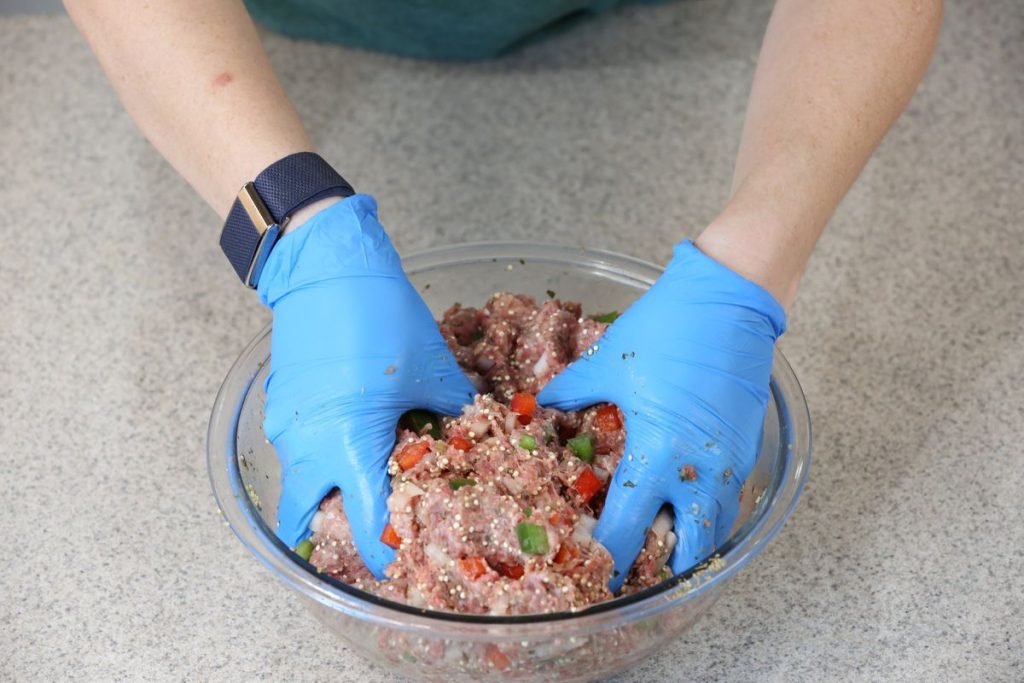
- Use your hands. It’s the fastest way to get everything completely mixed. I prefer gloves.
- Save time on chopping. A vegetable chopper makes quick work of the peppers and onion.
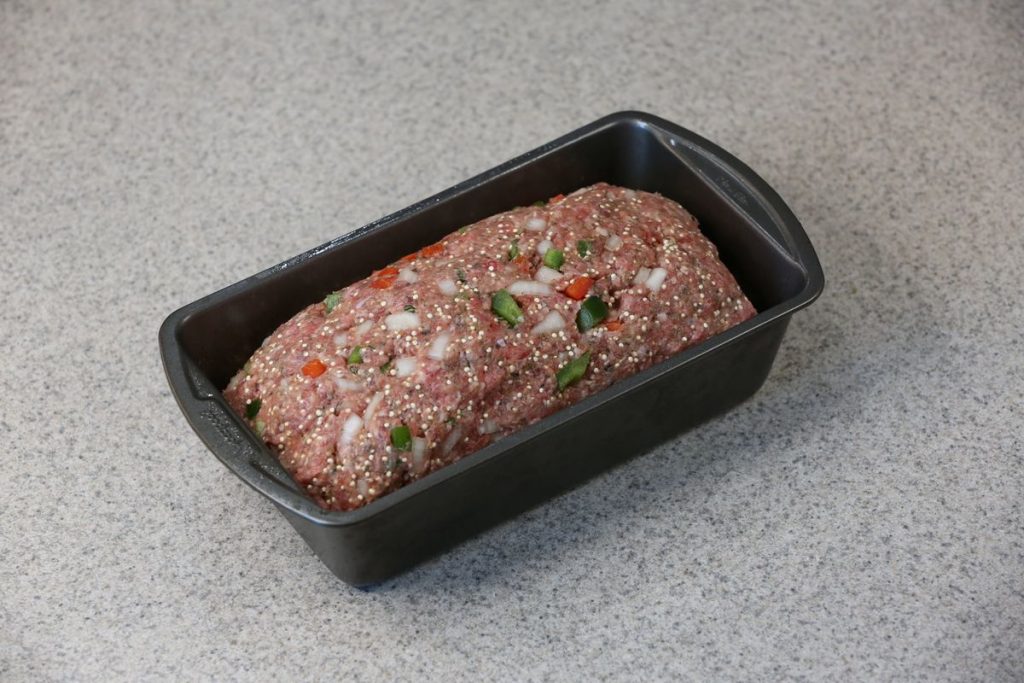
- Leave room at the edges. Shape the loaf with a mounded top and a little space around the sides so the juices have somewhere to pool.
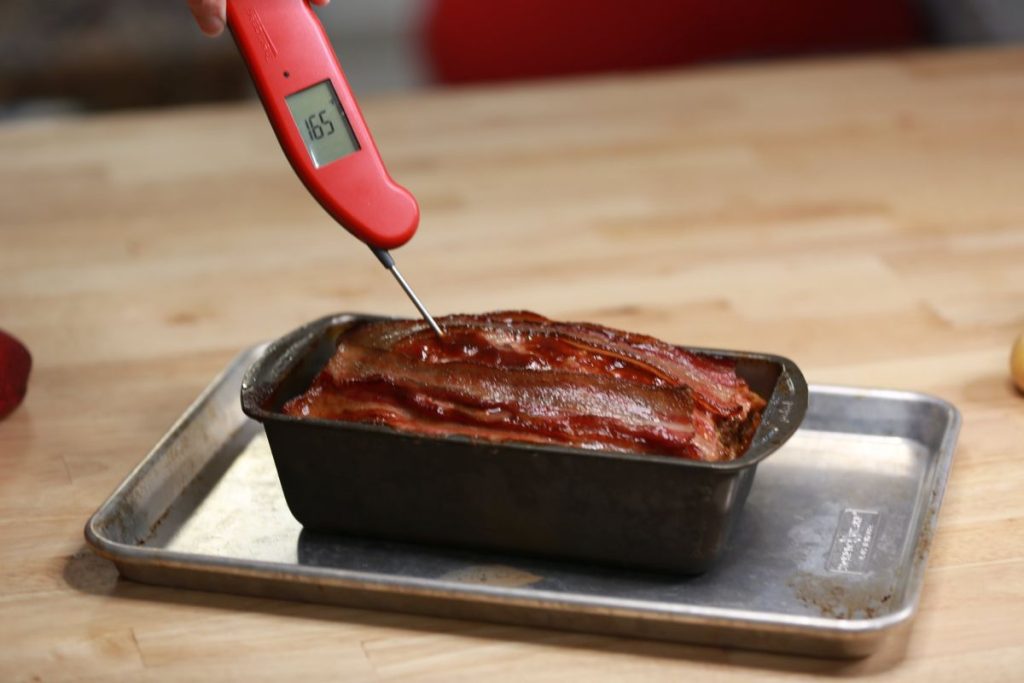
- Trust a thermometer. Bake to 165°F in the center. Ovens vary, so time is a guide; temperature is the test.
- Rest, then drain. Give it 10 to 15 minutes, then pour off the fat and juices before slicing.
- Crispier bacon is optional. I sometimes turn on the broiler at the end. It’s a preference, not a requirement. I lay the bacon straight across, because this is a weeknight dinner, not a magazine cover.
How to make it in a smoker
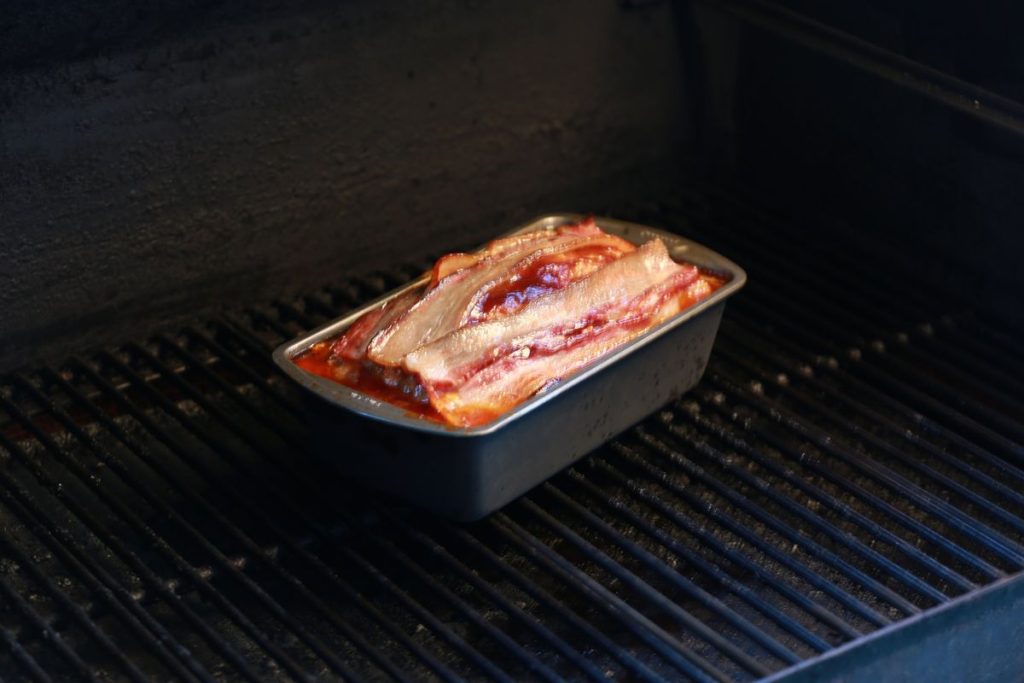
This is one of my favorite variations. The temperature and timing are about the same as the oven.
- Heat the smoker to 350°F. I like hickory, cherry or a competition blend. I stay away from mesquite.
- Place the meatloaf away from the heat source. If it sits too close to the flame, the bottom can get overdone.
- Use a metal loaf pan you keep just for the smoker, or a disposable foil pan. Don’t use your nice pans; they won’t look nice afterward.
- Set foil under the pan in case the juices flow over, and cook to 165°F in the center, about 60 minutes.
Make ahead, storage and leftovers
My day job keeps me away from the dinner table most Tuesday nights, so this is one I make on Monday. I bake it start to finish the day before, let it cool, and wrap the whole loaf tightly in plastic wrap to hold in the moisture. Then everyone slices and reheats a serving at a time.
One loaf gives us 8 to 10 slices. Depending on appetites, there are usually about four left, and they go straight into to-go containers with whatever sides we had, ready for lunch or a solo dinner. My family likes meatloaf sandwiches with the leftovers. I’m still searching for a gluten-free sandwich bread I love, so mine goes in a container with the sides.
- Fridge: refrigerate within 2 hours and eat within 3 to 4 days.
- Reheat: one serving at a time, until hot all the way through (165°F).
- Freezer: I haven’t tested freezing this one yet. I’ll update this section when I do.
What to serve with it
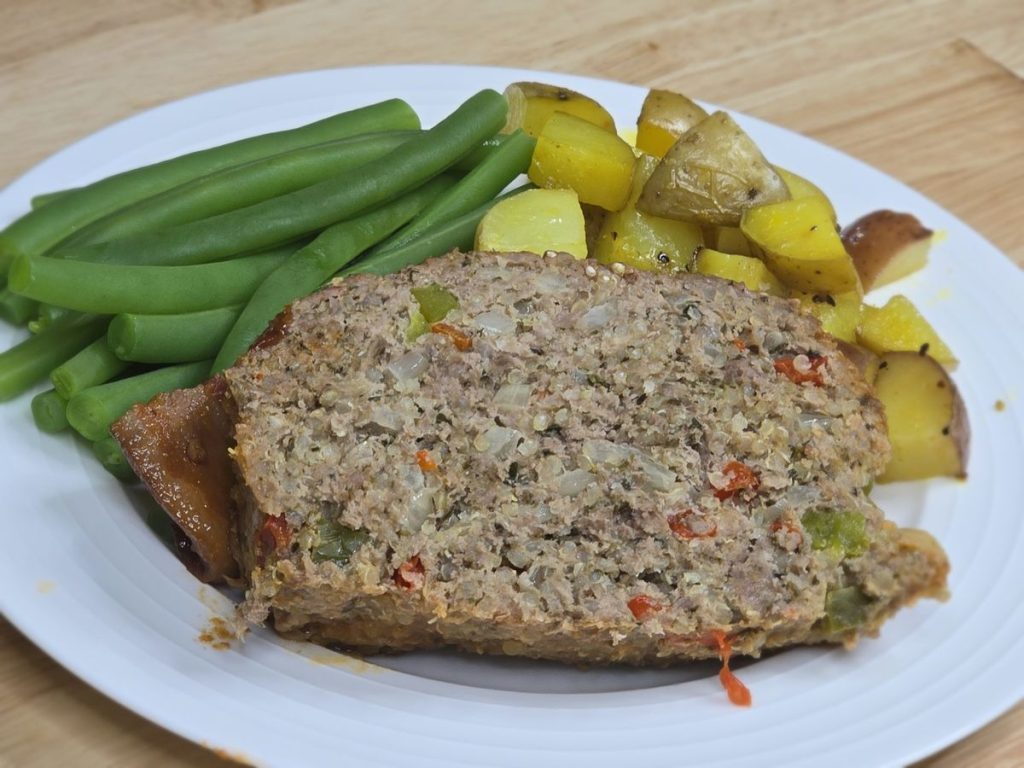
- Potatoes: baked potatoes, smashed potatoes or my garlic herb roasted potatoes (recipe coming soon).
- A green or orange vegetable: Brussels sprouts, green beans or carrots.
- Extra barbecue sauce on the side for spreading or dipping.
Four-Meat BBQ Meatloaf (Gluten Free)
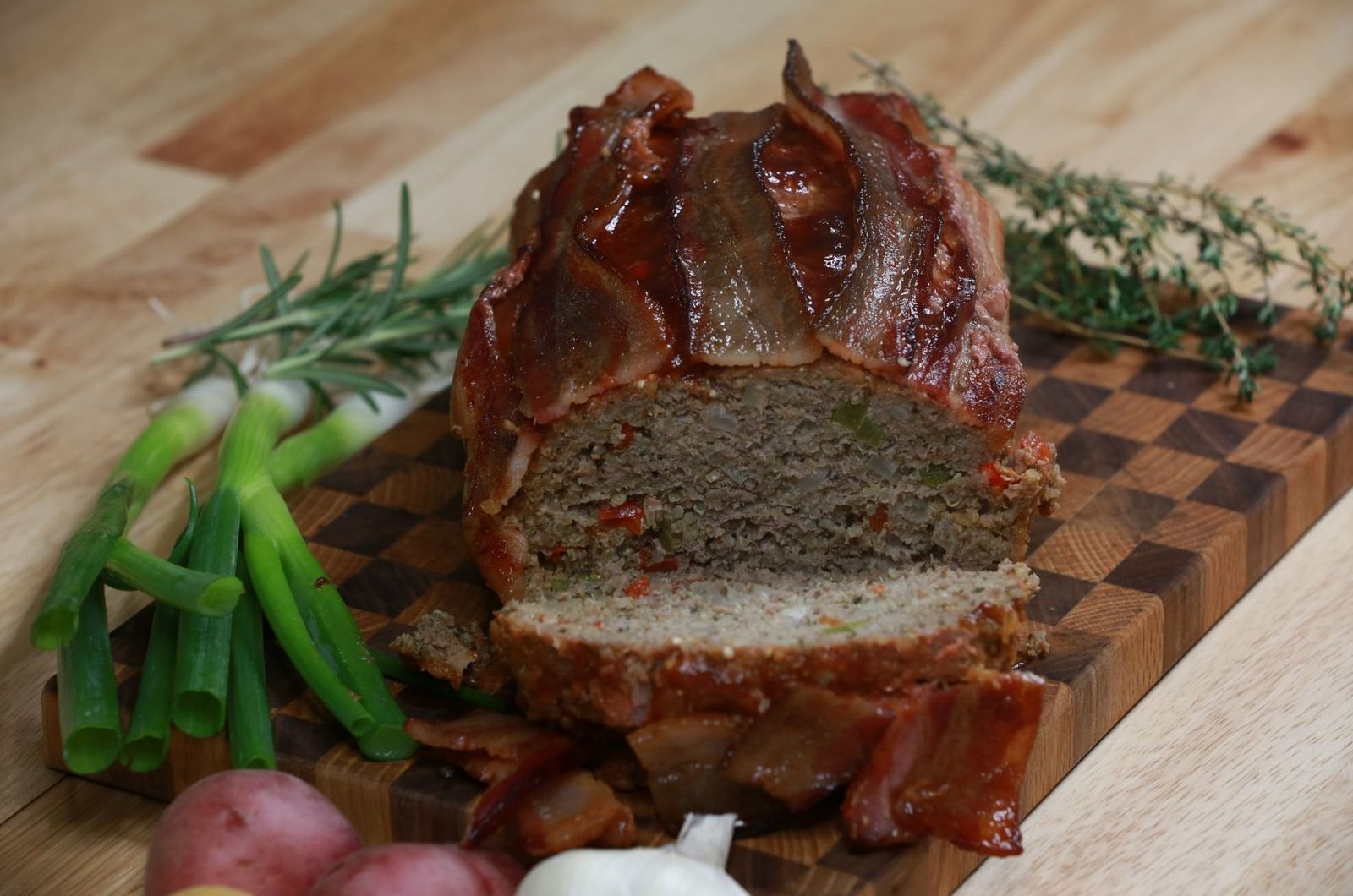
A juicy, high-protein meatloaf made with beef, turkey, Italian sausage and bacon, with dry quinoa standing in for breadcrumbs and a barbecue sauce glaze. Naturally gluten free, no added salt, and it makes great next-day lunches.
10
servings20
minutes1
hour427
kcal15
minutes1
hour35
minutesIngredients
- Meatloaf
1 lb lean ground beef (90/10 or 93/7)
1 lb lean ground turkey
1/2 lb gluten-free Italian sausage, hot or sweet, casings removed if using links
1/2 green bell pepper, diced
1/2 red bell pepper, diced
1 medium yellow onion, diced
2-3 cloves garlic, minced
2 large eggs
2/3 cup dry quinoa (uncooked; certified gluten free if possible)
3 tablespoons salt-free Italian seasoning
1 tablespoon dried sweet basil
1/2 teaspoon black pepper
1 tablespoon gluten-free Worcestershire sauce
1/2 teaspoon hot sauce
Butter, for greasing the pan
- Topping
1/2 cup gluten-free barbecue sauce, plus more for serving
5 slices bacon
Directions
- Heat the oven to 350°F. Butter a 9×5-inch loaf pan. Line a rimmed sheet pan with foil (or lay a sheet of foil on the rack below) to catch any juices that bubble over.
- Dice the green and red bell peppers and the onion, and mince the garlic.
- In a large mixing bowl, combine the beef, turkey, sausage, peppers, onion, garlic, eggs, dry quinoa, Italian seasoning, basil, black pepper, Worcestershire sauce and hot sauce. Mix with your hands (gloves are handy here) until everything is completely combined.
- Form the mixture into a loaf and transfer it to the buttered pan. Press it evenly into the pan with a mounded top, like a loaf of bread, leaving a little room around the edges for the juices to pool while it cooks.
- Spread the barbecue sauce over the top. Lay the bacon slices lengthwise over the sauce, trimming the ends if they hang over the pan.
- Set the loaf pan on the foil-lined sheet pan and bake for about 60 minutes, until an instant-read thermometer in the center reads 165°F. For crispier bacon, you can run it under the broiler for a minute or two at the end. Watch it closely.
- Let the meatloaf rest for 10 to 15 minutes, then carefully pour off the excess fat and juices. Slice and serve, with extra barbecue sauce on the side for spreading or dipping.
Equipment
- 9×5-inch loaf pan
- Large mixing bowl
- Instant-read thermometer
- Rimmed sheet pan or foil
- Food-safe gloves (optional)
- Vegetable chopper (optional)
Notes
- No added salt. The sausage, bacon and barbecue sauce bring plenty. Taste before you reach for the shaker.
- Spice level: my family likes heat, so I use hot Italian sausage. For anyone who doesn’t, use sweet Italian sausage.
- Brands I use: Johnsonville Hot Italian Sausage, Jennie-O 93/7 lean ground turkey, Kirkland Signature thick-sliced bacon, Bob’s Red Mill Organic Quinoa, Spice Islands Organic Italian Seasoning (Costco; salt free and organic), The Spice House cracked Tellicherry black pepper, Lea & Perrins Worcestershire (US version; contains anchovies), Dave’s Gourmet Hurtin’ Habanero, and Sweet Baby Ray’s or Kinder’s barbecue sauce. Always check labels; recipes change.
- Smoker option: 350°F with hickory, cherry or a competition blend, about the same time, to 165°F. Keep the pan away from the heat source and use a dedicated or disposable foil pan.
- Make ahead: bake a day ahead, cool, wrap the whole loaf tightly in plastic wrap and refrigerate. Slice and reheat one serving at a time.
- Nutrition: an estimate per serving (1/10 of the loaf), calculated in Cronometer using the brands listed above. It doesn’t account for the fat you pour off after baking, and it will vary with the brands you use.
Nutrition Facts
- Serving Size: 202 g
- Total number of serves: 10
- Calories: 427kcal
- Fat: 23.4g
- Saturated Fat: 8.2g
- Trans Fat: 0.2g
- Cholesterol: 142mg
- Sodium: 628mg
- Potassium: 500mg
- Carbohydrates: 18.8g
- Fiber: 1.9g
- Sugar: 8.6g
- Protein: 32.1g
Frequently asked questions
Yes, as long as your Italian sausage, barbecue sauce, Worcestershire sauce and quinoa are gluten free. Meat, vegetables, eggs and quinoa are naturally gluten free; the packaged ingredients are where gluten can hide. Everybody at my table eats this gluten-free version, and nobody can tell the difference.
No. It goes in completely dry. As the meatloaf bakes, the quinoa soaks up the juices from the meat and vegetables, doing the job breadcrumbs do in a traditional meatloaf.
The Italian sausage, bacon and barbecue sauce already bring plenty of salt, so the meatloaf doesn’t need any more. Taste a slice before adding any at the table.
Use sweet Italian sausage instead of hot. My family likes the heat, so I usually use hot, but I switch to sweet when I’m cooking for someone who doesn’t.
165°F in the center, measured with an instant-read thermometer. Because this meatloaf includes ground turkey, 165°F is the number to hit.
Yes. Let it rest for 10 to 15 minutes after baking, then carefully pour off the excess fat and juices before slicing.
Yes. Bake it a day ahead, let it cool, wrap the whole loaf tightly in plastic wrap to hold in moisture, and refrigerate. Slice and reheat one serving at a time.
Yes. Set the smoker to 350°F and cook for about the same time, until it reaches 165°F in the center. Keep the pan away from the heat source so the bottom doesn’t overcook, and use a dedicated metal or disposable foil loaf pan.